








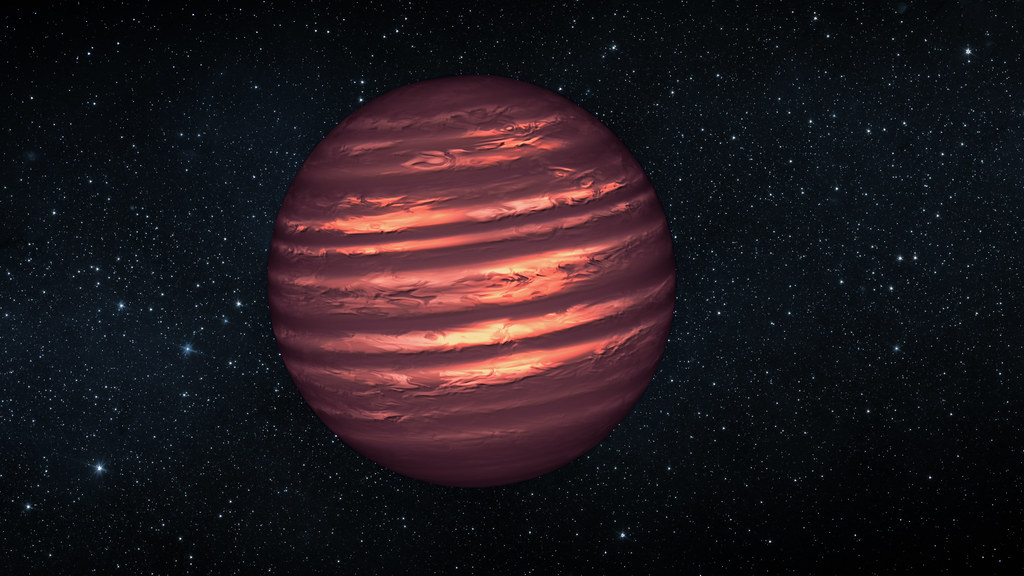
NASA space telescope is set to make headlines as the agency plans to construct a billion-dollar observatory in record time.
Introduction to PRIMA and its objectives
The recent announcement of the PRIMA project marks a significant step forward in the realm of astronomical exploration. NASA’s space telescope initiative aims to revolutionize our understanding of the universe by deploying cutting-edge technology and innovative design methodologies.
PRIMA, which stands for Precision Imaging and Measurement with a novel Architecture, has several key objectives:
- Expedited Development: To construct a billion-dollar space telescope in record time, leveraging streamlined processes and advanced engineering.
- Enhanced Imaging Capabilities: To achieve unprecedented resolution and sensitivity, allowing astronomers to observe celestial bodies in greater detail.
- Broad Scientific Reach: To support a variety of research areas, including the study of exoplanets, cosmic phenomena, and the expansion of the universe.
With PRIMA, NASA is not only aiming to accelerate the development of its space telescope but also to inspire the next generation of astrophysicists and engineers.
The significance of a new space telescope
The significance of a new space telescope extends beyond its technological advancements; it represents a major leap in our ability to explore the cosmos. With NASA’s commitment to developing the innovative PRIMA space telescope, the scientific community is eager to witness unprecedented discoveries.
PRIMA aims to address critical questions about the formation of galaxies, stars, and planetary systems. Its design incorporates cutting-edge features that enhance its observational capabilities. Some key aspects include:
- Advanced Imaging Technology: This will enable astronomers to capture stunningly detailed images of distant celestial objects.
- Improved Sensitivity: The telescope’s enhanced sensitivity will allow for the detection of faint light from distant galaxies.
- Rapid Deployment: By streamlining the design and construction processes, NASA hopes to reduce development time and costs.
Ultimately, the successful launch of the PRIMA space telescope could revolutionize our understanding of the universe and inspire future generations of scientists and explorers.
Funding and budget for the project
The funding and budget for the NASA space telescope project, known as PRIMA, have been a topic of significant discussion among stakeholders. With an estimated cost exceeding one billion dollars, careful financial planning is essential to meet the ambitious timeline for development.
NASA has allocated a substantial portion of its budget to ensure the successful launch and operation of PRIMA. Key budget considerations include:
- Research and Development: A significant investment will be directed towards advanced technologies required for the telescope’s innovative design.
- Construction and Launch: Funds will cover the manufacturing of components, integration, and the eventual launch into orbit.
- Operational Costs: Post-launch operations also require budgeting for data analysis and mission support.
To maximize the impact of the funding, NASA is exploring partnerships with private sector companies and international space agencies, ensuring a collaborative approach that enhances both resources and expertise.
Timeline for the telescope’s construction
The timeline for the construction of the NASA space telescope, known as PRIMA, is ambitious yet feasible, aiming to deliver results in record time. The project has been meticulously planned to ensure that each phase is executed efficiently.
Key milestones include:
- Phase 1 – Design Approval: Scheduled for completion by the end of Q2 2024, this phase will finalize the telescope’s design specifications.
- Phase 2 – Component Manufacturing: Expected to begin in early 2025, this phase focuses on the production of critical components, leveraging advanced manufacturing techniques.
- Phase 3 – Assembly and Testing: Set to commence in late 2026, the assembly will take place at a dedicated facility, followed by rigorous testing to ensure functionality.
- Phase 4 – Launch Preparations: Aiming for a launch window in 2028, this phase will involve final integrations and transport to the launch site.
The streamlined approach reflects NASA’s commitment to innovation and efficiency in space exploration.
Technological advancements in telescope design
Recent technological advancements have significantly influenced the design and efficiency of the NASA space telescope, PRIMA. The integration of cutting-edge materials and innovative engineering practices has streamlined the construction process, allowing for rapid deployment without compromising quality.
Some of the key advancements include:
- Adaptive Optics: This technology enables real-time adjustments to the telescope’s optics, improving image clarity and enabling the observation of distant celestial objects.
- Lightweight Materials: The use of advanced composites and lightweight alloys reduces the overall weight of the telescope, making it easier to launch and maneuver in space.
- Automated Systems: Enhanced automation in the telescope’s systems allows for faster data processing and analysis, facilitating quicker scientific discoveries.
These innovations not only enhance the performance of the NASA space telescope but also contribute to the project’s goal of achieving unprecedented observational capabilities in record time.
Challenges faced by NASA in this endeavor
The development of the NASA space telescope, PRIMA, has not been without its challenges. Key obstacles have arisen at various stages of the project’s planning and execution.
Some of the primary challenges include:
- Budget Constraints: Despite significant funding, managing costs effectively while ensuring high-quality results remains a crucial issue.
- Technological Integration: Merging cutting-edge technologies within a unified system has proven to be complex, necessitating innovative solutions.
- Project Timelines: Adhering to ambitious deadlines has led to pressure on teams, often requiring rapid iterations and adjustments.
- International Collaboration: Coordinating efforts among multiple global partners involves navigating diverse regulations and varying technological standards.
Each of these challenges poses potential risks, but NASA’s commitment to overcoming them is evident in its strategic planning and resource allocation. The priority remains on delivering a reliable and efficient NASA space telescope that can advance our understanding of the universe.
Future implications for astronomical research
The development of the NASA space telescope, known as PRIMA, carries profound implications for the future of astronomical research. This pioneering project is set to enhance our understanding of the universe, paving the way for groundbreaking discoveries about distant galaxies, exoplanets, and cosmic phenomena.
One significant outcome of PRIMA’s advanced design is its potential to provide clearer and more detailed images of celestial bodies, which will enable scientists to analyze data with unprecedented precision. With its enhanced capabilities, astronomers will be able to explore questions related to the formation of the universe and the possibility of life beyond Earth.
Moreover, the collaborative nature of the project fosters a new generation of scientists and engineers, instilling a sense of innovation and creativity. As PRIMA sets the stage for the next era of space exploration, the knowledge gained from its operations is likely to influence future designs of space telescopes and instruments.
In summary, the NASA space telescope represents not just a technological advancement but a transformative moment for the field of astronomy.
The NASA space telescope has been designed using a quick and proven design approach that allows for rapid deployment and efficiency. This innovative method ensures that the NASA space telescope can meet the rigorous demands of modern astronomical research.
By NASA Goddard Photo and Video via Openverse